Unearthing the past: Ambilac's legacy
Journey through the pivotal moments of Ambilac's history, a story deeply intertwined with groundbreaking archaeological research on the Giza plateau and the Great Pyramid. Discover the passion and dedication behind our exploration.
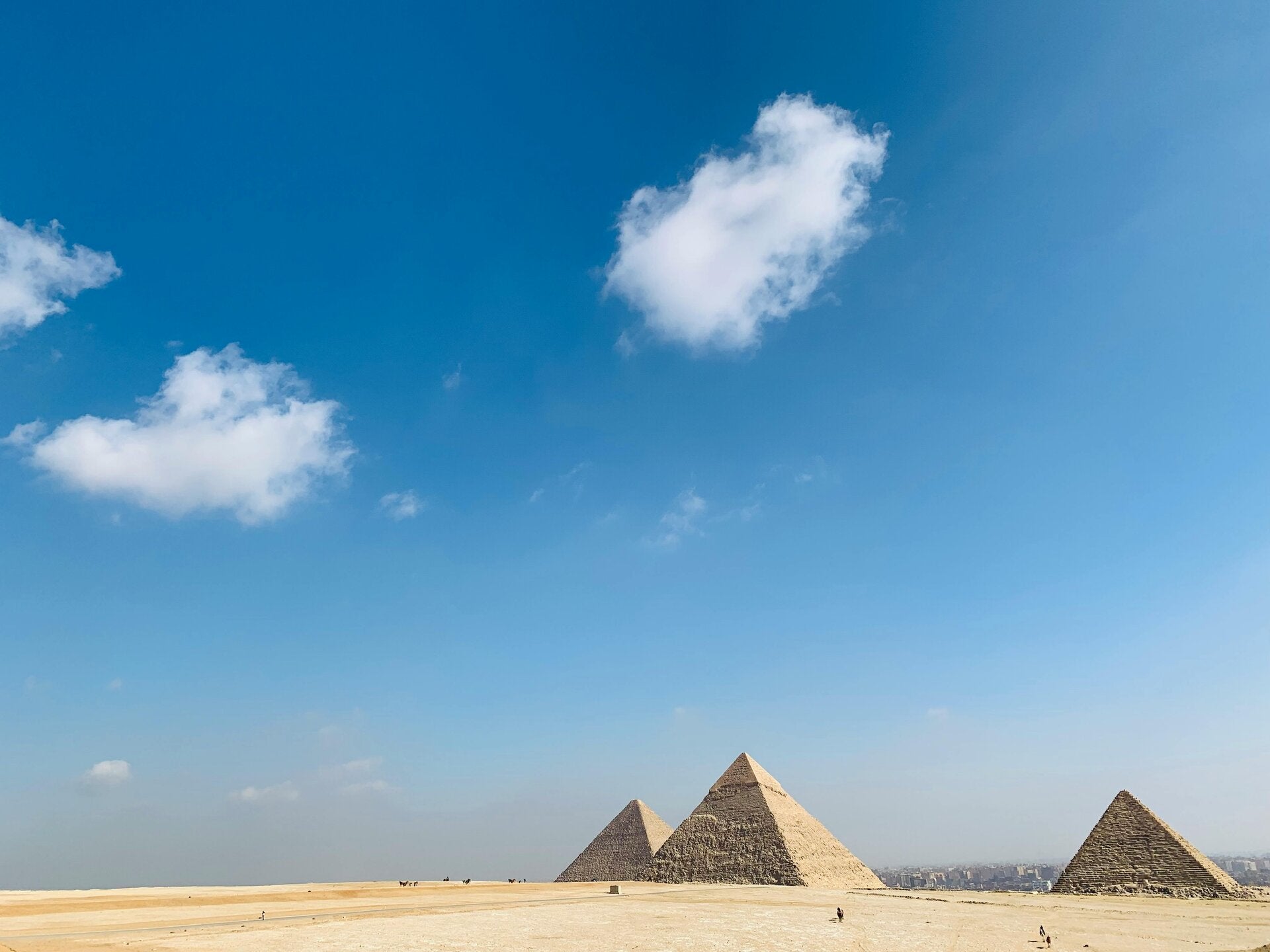
Pioneering research at Giza
Ambilac's journey began with a profound commitment to archaeological research, particularly at the iconic Giza plateau. Our teams have dedicated countless hours to uncovering the secrets of this ancient wonder, contributing significant insights into its construction and purpose.

The Great Pyramid: A focus of study
Central to Ambilac's historical work is the extensive study of the Great Pyramid. Our investigations have sought to understand its architectural marvels, the techniques of its builders, and its place within the broader Giza necropolis.
With the current revelations and discoveries on the Giza Plateau, I thought this would be a good opportunity to unveil as it were, the long-standing work and research of our ‘Ambilac’ team and friends, all sadly passed on, who had been tirelessly working on the mysteries of the Giza Complex for over 60 years. The findings of some of their published work, are only now in recent years being ‘rediscovered’ and with social media promoted worldwide.
There is an adage used in reference to the soldiers who perished during the world wars, ‘Lest we forget’ and I borrow that term here for my research collaborators and friends. James (Jim) Wilkie, Dr Jan Merta and Peter Tomkins.
The story begins.
In 1998 I joined forces with Jim Wilkie (RIP) AND Dr Jan Merta (RIP), who had been working on the research of the Giza Plateau, and in particular the complexities of the structure and mathematical/astronomical connections of the pyramid of Khufu. In addition, the connection with the books in the Old Testament of Genesis and Exodus.
Jim and Jan had been in turn working with Peter Tomkins, (RIP) an author of several well-known books, such as ‘Secrets of the Great Pyramid’ (1978), Mysteries of the Mexican Pyramids (1976), ‘The Magic of Obelisks’ (1984) and the ‘Secret Life of Plants’ (1997).
Peter also wrote, ‘A Spy in Rome’ (1962) a non-fiction book that details his experiences as an American Office of Strategic Services (OSS) agent in Rome during the German occupation in World War II.
Jan Merta who had a diverse background was put forward to the Guinness book of records back in the 1980’s as the most accomplished man in the world. He possessed degrees in a variety of subjects and several Post graduate qualifications, too many to name here. However, his epic bio is still available to read via the Canadian Whose who 1997 edition, and I invite you to take time to read through this article to gain an understanding on how the Ambilac team came to an understanding of the Giza Complex.
https://digitalbloggers.com/assets/media/pdf/oqe5_JAN-MERTA-de-VELEHRAD.pdf
It was Jan, in the early 1970’s, as a young man, who was among the first to experiment with sounds in the Pyramid of Khufu. Using a padded wooden paddle, he hit the granite stones in the Kings Chamber, which emitted a loud eery dull sound. The sounds were consistent throughout the chamber, of which there was no deviation. Sounds recording here.
Jim Wilkie, a sniper in the Vietnam war, had worked most of his life on unravelling the mysteries of the Great Pyramid of Khufu, and for some years collaborated with ARE (Edgar Cayce’s Association of Research and Enlightenment.
In 1998 I received an en email while lecturing at Swansea University, apparently, Jan Merta had searched me out and ‘picked up’ that I was worth contacting. By now I had been travelling to Egypt since 1994 and had begun investigating the Giza complex. At this point, I must add an addendum on a particular part of Jan’s experience. In the 1970’s Jan was asked by NASA, to assist to identify anomalous signals emanating from Mars. On arrival at NASA HQ, he met a young teenager, Uri Geller. Apparently to identify and translate these signals, NASA was prepared to contact a number of people working in diverse areas.
To cut a long story very short, a few weeks later I joined forces with the ‘Ambilac’ Canadian team. Eventually this resulted in our two published volumes in 2000/01 on the Giza Complex. ‘Giza Genesis The Best Kept Secrets’ Vol 1 and Vol 2 ‘The Sphinx revealed.
The interest in Volume 1 was tremendous and after our interview on the radio show, Coast to Coast AM, c 2002, we knocked Stephen King the fiction writer, off the top 50 on Amazon.
In 2005, Jim and myself, headed to Cairo for a desert adventure where we teamed up with Richard Gabriel and Gerry Canon. Our desert forages can be seen on a recently made video by Peter Hossfeld from Switzerland who was our cameraman. The 90 minute video can be viewed here along with the background of the team involved.
https://hiddenwonders.ch/film-2/
It was Gerry Canon who in 2005, brought forward his theory of a second sphinx on the Giza Plateau, and his research and theory of this revelation ca be read in a book published by Gerry c 2005 https://piramidasunca.ba/images/2016/08/second-sphinx.pdf
We continued to collaborate for some years and further work we had compiled was due to be published, including a complete overview and explanation of why the book of Genesis was in fact a book on genetics. Sadly, Jim passed on in 2009, he had been suffering from issues since the Vietnam war where he was wounded, resulting in a blood transfusion in which the blood was infected. Unfortunately, all his research and writings, were accidentally thrown away when his house was cleared in Winnipeg, Canada.
I was to continue our research with the help of Jan Merta, who in 2009 moved from Canada to return to his original home in Czechoslovakia. Sadly, Jan passed away unexpectantly in the August of 2010. I spoke to him on the telephone about 10 days before he passed and he seemed well, however he mentioned he was to have a routine health check at the hospital.
I had not heard for some weeks, so contacted a mutual friend, who informed me Jan had passed while undergoing his health check after a routine injection.
Jan had a substantial private library collection, especially about psychology and parapsychology.
Peter Tomkins had passed on in 2007, so by now all the Ambilac team, apart from myself, had ‘ad astra’ as they say.
I continued with my own research but from 2005 I was concentrating on the Coptic archaeology in Egypt, of which there is much to be discovered, including connections with the Giza Complex.
At the time I was lecturing in archaeology and ancient history for the Adult Education department, Swansea University, and by 2010 had set up the programme for the part time degree in Coptic Studies, for which I ran for a few years before retiring after 25 years in 2016.
I continued to write, and in 2020 published ‘El Antikkhana: 1835-2020: The Egyptian Museum - 185 years in the Making’. While in 2022, my book on the River Nile was published, ‘Life On the Nile: An Illustrated Journey’
I had also been travelling to France for as long as I had travelled to Egypt (35 years plus) and from 2015 we lived for six months of the year in Southwest of France, the Pyrenees and Heraut region. I maintained my interest in photography, archaeology and writing, which culminated in publishing this year (2026) ‘A Journey Through Herault: The History and Archaeology of the Department of Herault, S.W. France’
Throughout my years of research from the early 1990’s, I attempted to bridge that gap of traditional academic research, and the more ‘alternate’ theories of our history, having experience on both sides of that river! On my journey, I have met and collaborated with many interesting and well-known people in the field pf Egyptology and archaeology and continue to collaborate with many of those researchers.
In 2025, I was approached by Richard Gabriel, who I had known for over 20 years and William (Bill Bown) who I had first contact with in 2014, to form an alliance with Trevor Grassi, to establish a nonprofit foundation. In August 2015, the Archaeological Rescue Foundation was born. The remit of ARF is to find, preserve and promote the many archaeological sites at risk, and to openly offer any research and findings for educational use.
Looking back over the past 40 years or so, I have been privileged to meet some of the most extraordinary people on the planet, divulging their unique research, and visiting some of the most unique and often isolated, places, especially Egypt. Such experiences could fill a few volumes at least. But for now, as I sit back and read of the many interesting revelations coming out of Egypt, it brings some kind of positive note, that I was part of a team that helped to bring much of what you see today, come to fruition.
2026 looks to be a year of true enlightenment!
Howard Middleton Jones
March 2026
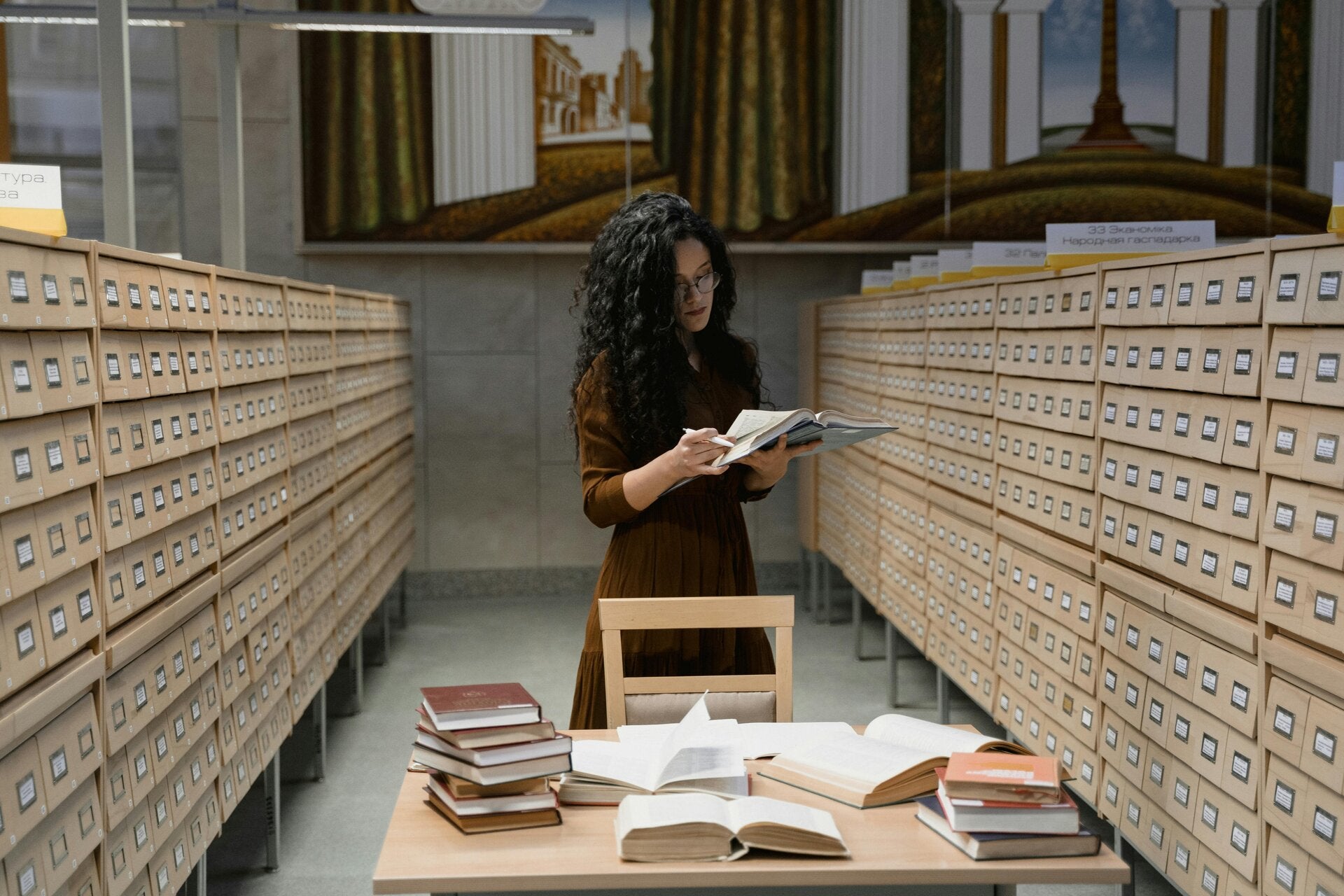
Ambilac's contributions to archaeological literature
Through dedicated effort, Ambilac has published numerous books and academic papers, sharing our discoveries and interpretations of the Giza plateau with the global archaeological community. These publications serve as essential resources for further study.
Create Your Own Website With Webador